What Is Functional Fitness Training?
Fitness is full of buzzwords and jargon—so what is functional fitness training, and why is it important?
Here’s the answer:
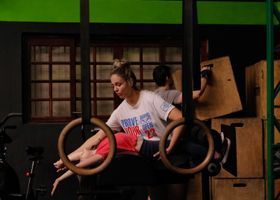
Functional fitness training is used to help people become better at things they do in daily life. The movements used in this style of training are often—but not always—very similar to the movements you do every day.
For example, squats are an important functional movement because they help you rise from seated to standing. Deadlifts help you pick objects off the floor—like groceries, a kid, a pet or a box. Shoulder presses can help you put a bag of dog food on a shelf, and farmer carries can help you get the trash to the curb.
Other movements, like kettlebell swings, have significant carryover into daily life: If you learn to open your hips quickly, you’ll likely be able to hop over a puddle or run to catch the bus.
If you compare functional training to bodybuilding, the concept is even more clear.
The goal of bodybuilding is to gain muscle mass, so people use all kinds of machines, implements and movements to isolate certain muscles in training. Then they use specific sets, reps and rest intervals to encourage muscle growth. Bodybuilders are generally interested in size, tone and symmetry, not cardiovascular endurance, stamina, flexibility and so on.
One more comparison: powerlifting. Powerlifters want to become as strong as possible in just three movements. So everything they do is designed to help them move more weight in the squat, bench press and deadlift. They also use specific equipment and training plans to achieve these goals.
With functional fitness training, the goal is much more general: increased total fitness.
The 10 Functional Fitness Domains
To improve overall fitness, functional training emphasizes full-body movements, free weights rather than machines, lots of variety, and workouts of differing length and intensity.
These programs are not “random,” but they don’t look like traditional routines that call for 3 sets of 8-10 reps in every workout.
Here are four very different functional training workouts that will help you become fitter in general:
- Run 5 kilometers.
- In 20 minutes, do as many rounds as possible of 5 pull-ups, 10 push-ups and 15 squats.
- Perform 5 sets of 5 heavy barbell back squats.
- Perform 21-, 15- and 9-rep rounds of dumbbell push presses and box jumps.
When put together in a training plan, workouts like this are designed to help people improve all these things:
- Cardiovascular/respiratory endurance.
- Stamina.
- Strength.
- Flexibility.
- Power.
- Speed.
- Coordination.
- Agility.
- Balance.
- Accuracy.
With that list in front of you, you can see why someone who does functional training usually has the ability to perform well in any physical task inside or outside the gym.
A program like this can also be used to help someone lose weight or body fat, gain muscle and strength, or improve conditioning. Some people even use this style of training to improve performance in sports. It’s incredibly potent and a lot of fun.
Is Functional Training for You?
So is functional training better than other styles of training?
It depends on your specific goal. It can be very effective, and it’s incredibly enjoyable in a one-on-one setting or in a group! But if you prefer other methods or have specific goals beyond general fitness, another style of training might work better for you.
The good news: We can tell you how to train to accomplish your goals—whatever they are. We know all the different styles of training well and can provide an exact plan that will bring success.
If you’d like to talk to us about functional training or ask us how to accomplish your goals, book a free consultation here!
The post What Is Functional Fitness Training? appeared first on Fernie Mountain Fitness & Athletics.